Who Used the Darkrooms?
Throughout the 1980s, Camerawork’s darkrooms opened photography to more people in
East London. These spaces offered more than just facilities. They fostered creativity,
engaged the community, and promoted social inclusion by welcoming people of many
backgrounds and abilities.
The darkrooms welcomed individual photographers, from amateurs to professionals. Youth
and school groups from the local area and beyond were participating in the darkrooms.
When Camerawork launched their darkroom project in 1981, figures from their 1981/82
annual report showed that 85 individuals and 15 organisations used the darkroom facilities.
Over the next couple of years, that number would grow significantly, to 336 individuals and
52 organisations using the darkroom facilities, as shown in the 1983/84 annual report. Most
users lived nearby, with approximately 5% of individual users coming from Tower Hamlets,
showing Camerawork’s strong local ties.
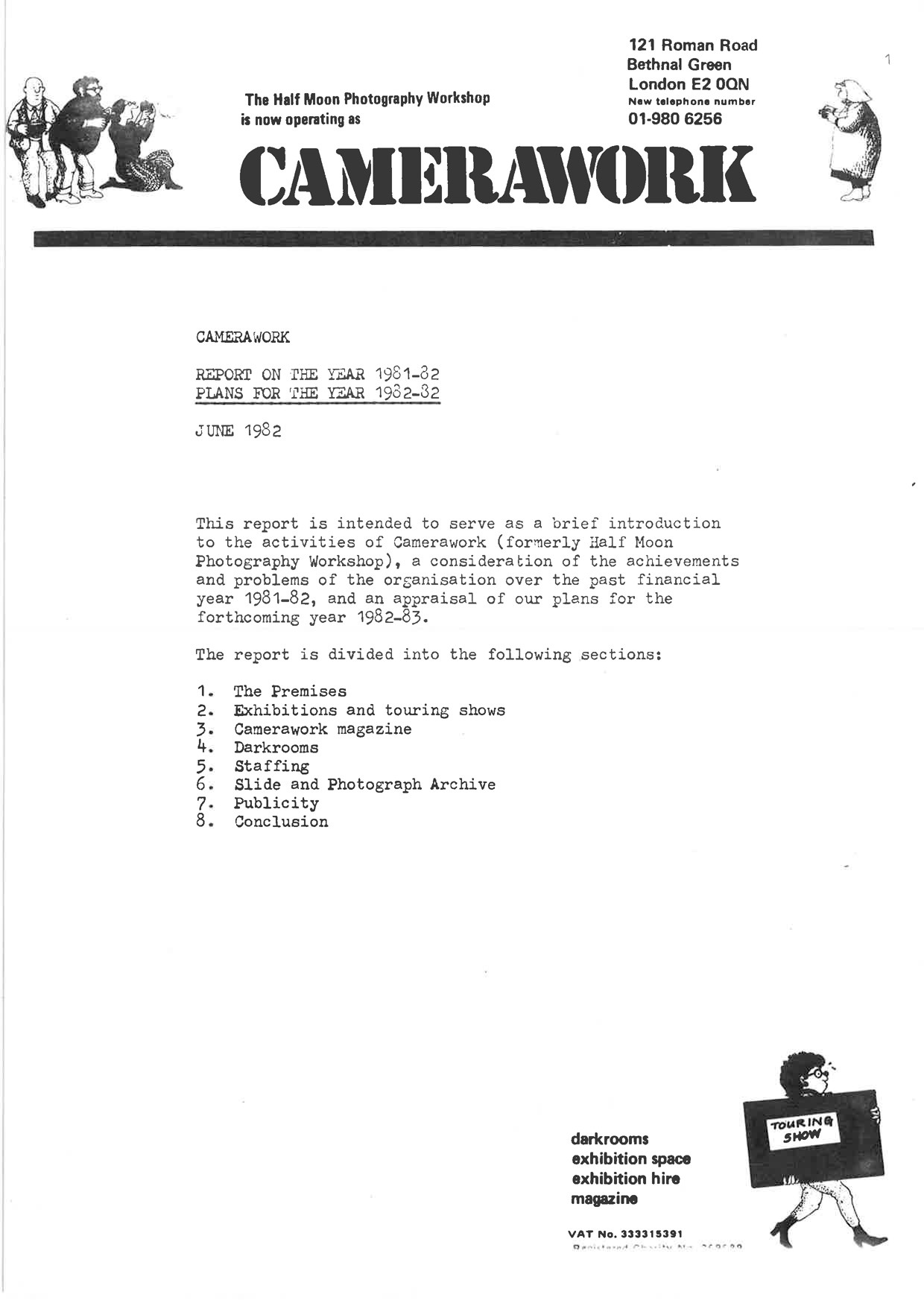
Read the full 1893/1984 Annual Report
The darkrooms stayed busy all week with youth and school groups from across East London
regularly using them. Schedules and timetables give an insight into the day-to-day life of the
darkrooms.
Camerawork was also very keen on equipping local youth with photographic skills, and as
well as having the darkrooms used by schools, they offered weekend courses, such as the
children’s workshop ‘Saturday Snappers,’ which was very popular. The darkrooms also
attracted media attention, and on October 11, 1987, the communal darkroom was used by
London Weekend Television (LWT) to film darkroom techniques as part of the ‘Wake Up
London’ programme. Anne McNeill, who was a Camerawork darkroom worker at the time,
brought three children in to demonstrate aspects of darkroom printing and developing.
Camerawork recognised that some groups faced barriers to participating in the arts. Their
1982/83 annual report shows a commitment to supporting women, young people, and
disabled people. The first mention of creating wheelchair access at Camerawork dates to
the early 1980s, and by 1983/84, they were seeking funding to improve access to the garden
for disabled visitors.
This commitment led to the opening of a fully wheelchair-accessible darkroom on December
21, 1986. Musician Ian Dury launched the event with The Frank Chickens, giving a short
performance to celebrate!
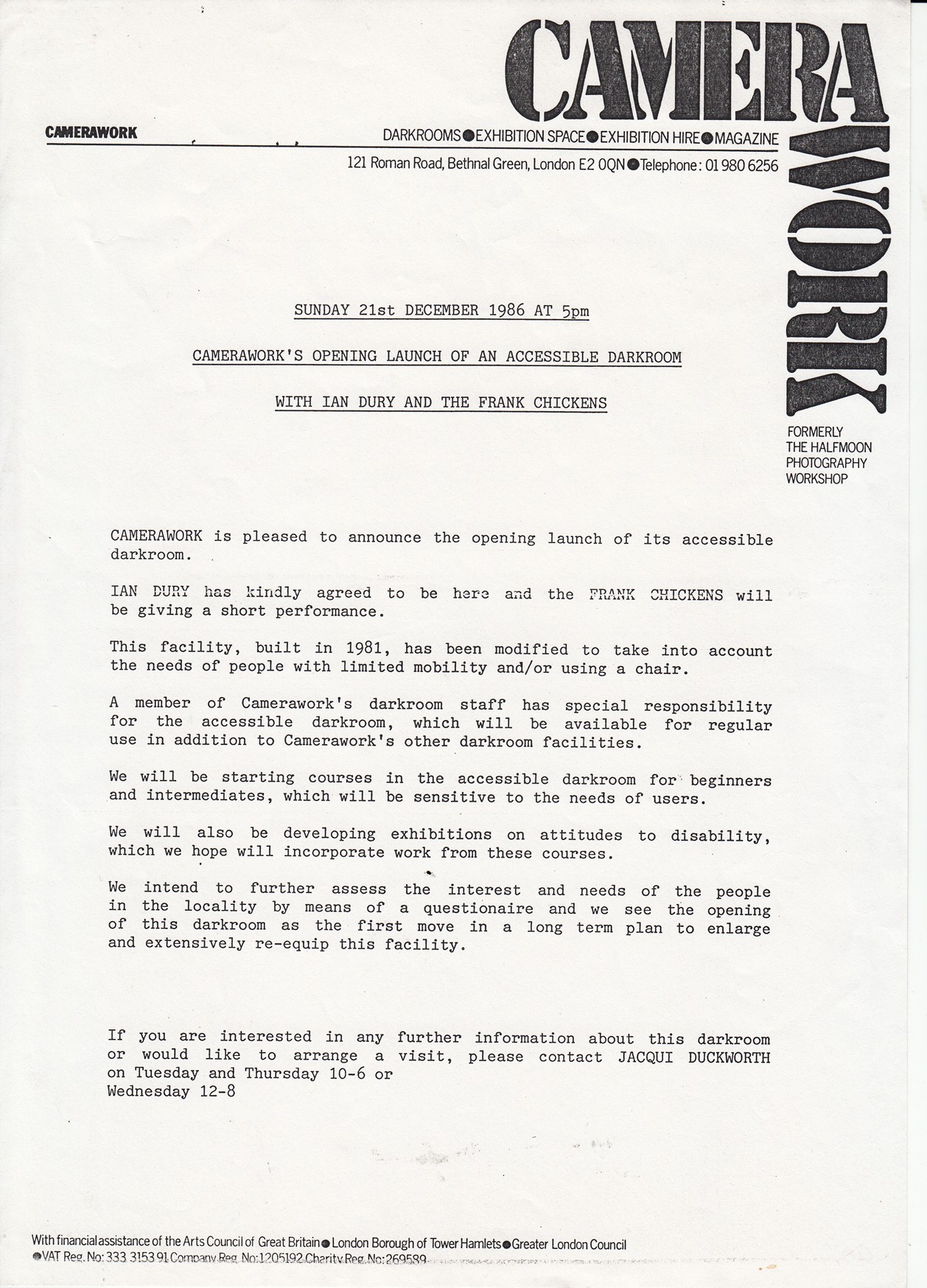
This marked an important moment in Camerawork’s efforts to be inclusive and accessible. A
new staff member was assigned to specifically support disabled users and promote the
accessible facilities. Camerawork worked on outreach to promote their accessible darkroom
amongst the surrounding boroughs and had contracts with various charities and clubs such
as the Limehouse PHAB club, SHAPE London (Shape Arts) and Artsline (which sadly ended its services in 2018). When Camerawork’s accessible darkroom existed at the time, it provided
a fantastic opportunity for disabled users. Years later, unfortunately, the space had to be given up due to a lack of engagement.
Camerawork’s darkrooms tell a story of community, creativity, and accessibility. They
removed barriers and welcomed everyone, enriching the local arts scene. This ethos is still
very much alive in Four Corners today.
This article was written by Charlie Stanley who is an emerging museum professional specialising in collection care and cultural heritage digitisation. Charlie currently works at the British Museum and was previously at the Victoria and Albert Museum. Alongside her professional practice, she has a strong passion for film photography and darkroom’s which led her to explore the Four Corners archive and draw together the research behind this mini series as part of her final project for the MA in Museums, Galleries and Contemporary Culture at the University of Westminster.
Read the next post in this series on our Darkrooms here.