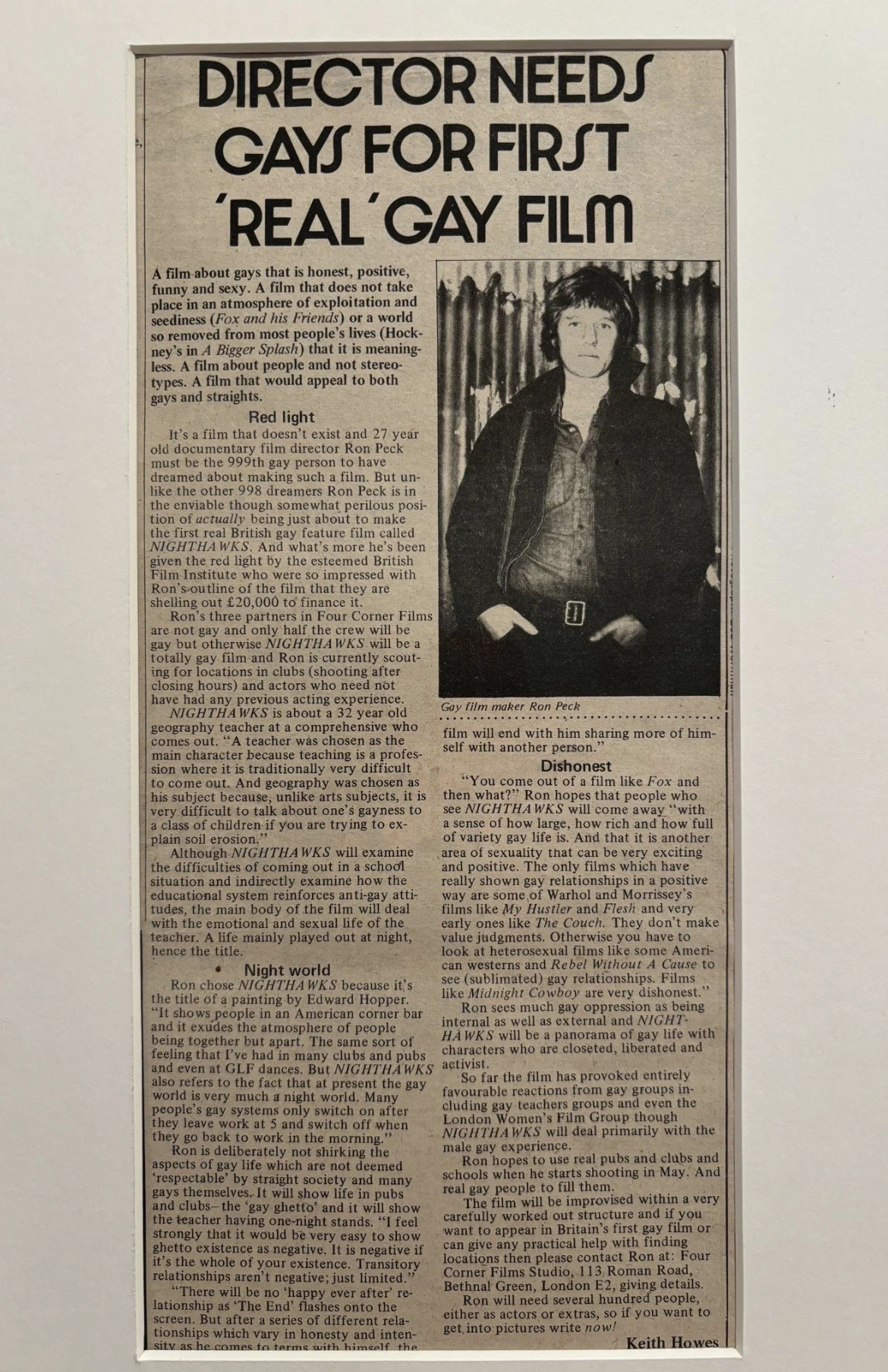
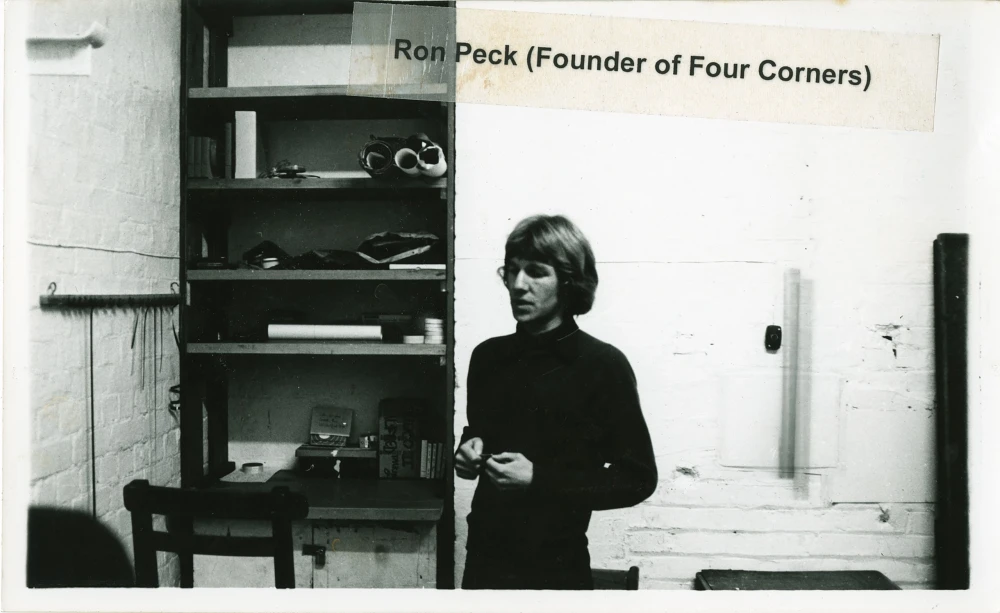
Four Corners Feature film, Nighthawks (1978), created by Co-founder Ron Peck, is considered Britain’s first feature film about gay life. It was groundbreaking in its representation of the ‘double life’ gay men experienced during the 1970s. Ron Peck’s interest in pushing back against stereotypes and depicting the everyday experiences of homosexuals was, in part, inspired by his affiliation with the Gay Liberation Movement. He wanted to make a film that would depict the everyday experiences of people in the queer community, their spaces, and the themes surrounding a life that was largely unknown to the majority at the time. This, in turn, sparked an important political dialogue about the film and its reception by the public.
Sex Politics
In an oral history from the Four Corners Archive, filmmaker Ron Peck reflected on his drive to make a gay feature film amid changing social attitudes in 1970s Britain. Although the 1967 Sexual Offences Act decriminalised homosexual acts between two men over 21, it only applied if they occurred strictly “in private.” This disproportionately affected working-class individuals without access to secure housing. Public queer spaces were highly regulated, and government fears of “promoting” homosexuality led to Section 28 of the 1988 Local Government Act, which banned the depiction of same-sex relationships as acceptable in schools or public institutions (repealed in 2000). Queer individuals sought out community in underground spaces and clubs, which is reflected in the film. Peck’s Nighthawks (1978) captures the tension of a “double life” many gay men were forced to lead, the life caught between private identity and public invisibility.
Tony Godden, who played the DJ in Nighthawks, reflected in his oral history on how the film became a turning point in his personal and artistic life. Though compensation was minimal, the opportunity helped him pursue a career in the arts. Godden recalled facing violence due to his sexuality and saw participating in Nighthawks as contributing to gay history.
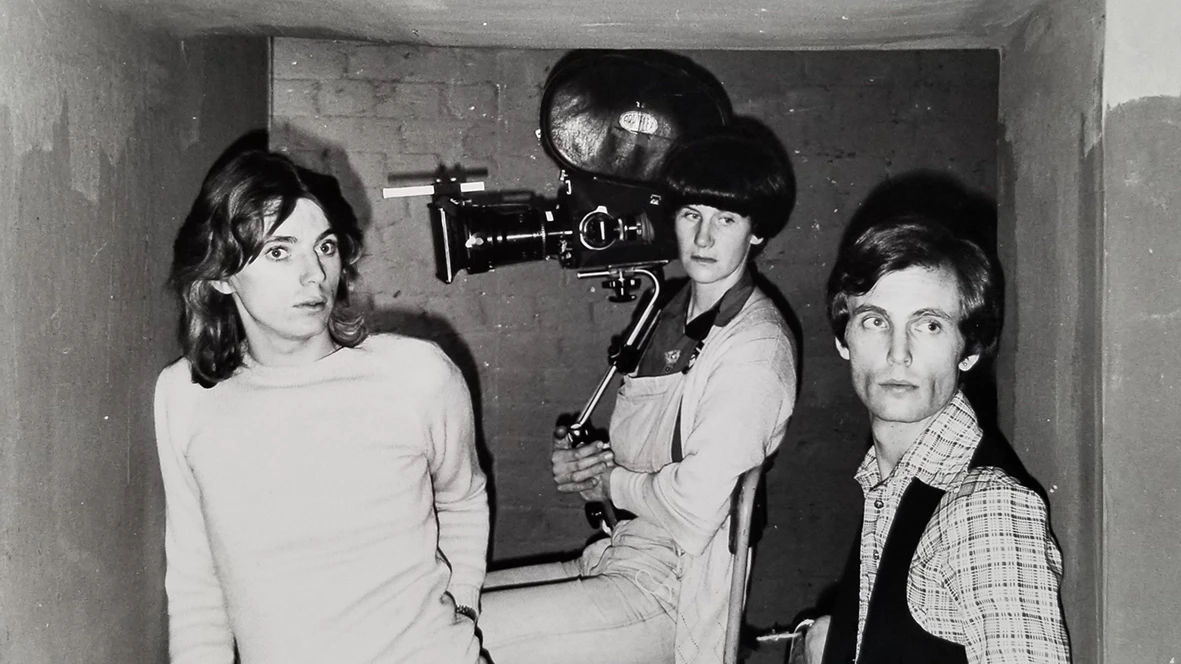
He responded to a casting ad in Gay News with no prior acting experience, hoping it would help him get into film school. He also captured behind-the-scenes photographs and noted that the film closely mirrored real life; many cast members formed intimate connections off-screen. Godden also highlighted the film’s bold decision to include a school setting, emphasising the political risks of showing young people within queer narratives at the time.
Ron Peck and Paul Hallam recalled how Nighthawks sparked strong reactions upon its release, reactions that continue to shift with changing political landscapes. Its television debut on Channel 4 ignited public outrage, particularly over the inclusion of children in a queer narrative. Peck received death threats, and tabloids ran headlines like: “Child Porn Row Looms On Gay Film.”
At the time, Channel 4 was airing so-called “red triangle” films, marked with a red triangle icon warning viewers of adult or controversial content. Nighthawks aired in this climate, just as the Conservative government introduced Clause 28 in 1988, which banned the “promotion” of homosexuality by local authorities. This backdrop of moral panic and political censorship made the film’s public presence a bold act of resistance. On the contrary, private investors of the film were frustrated by the aesthetics. Peck noted that many wanted a clear romantic ending rather than an ambiguous one.
Production
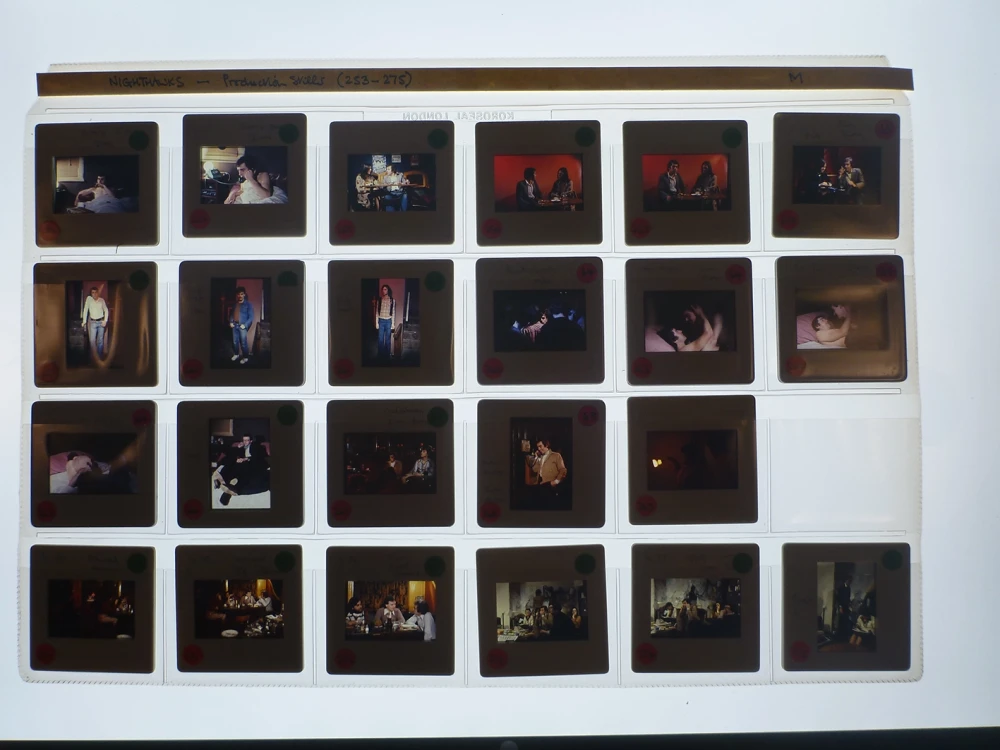
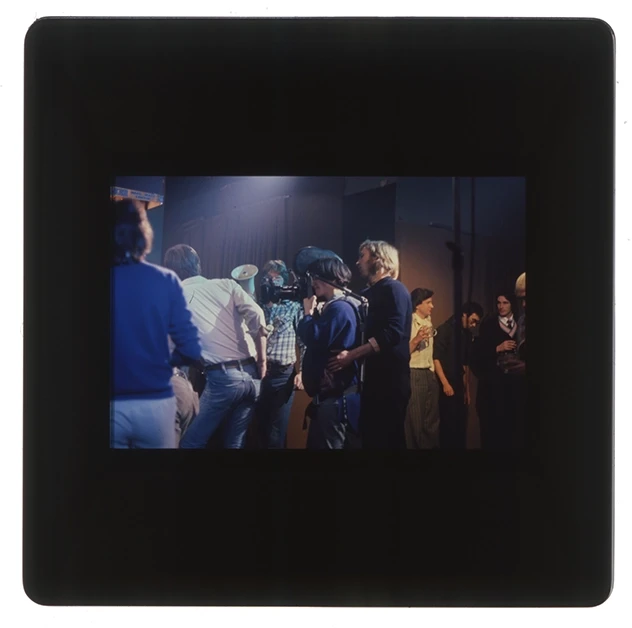
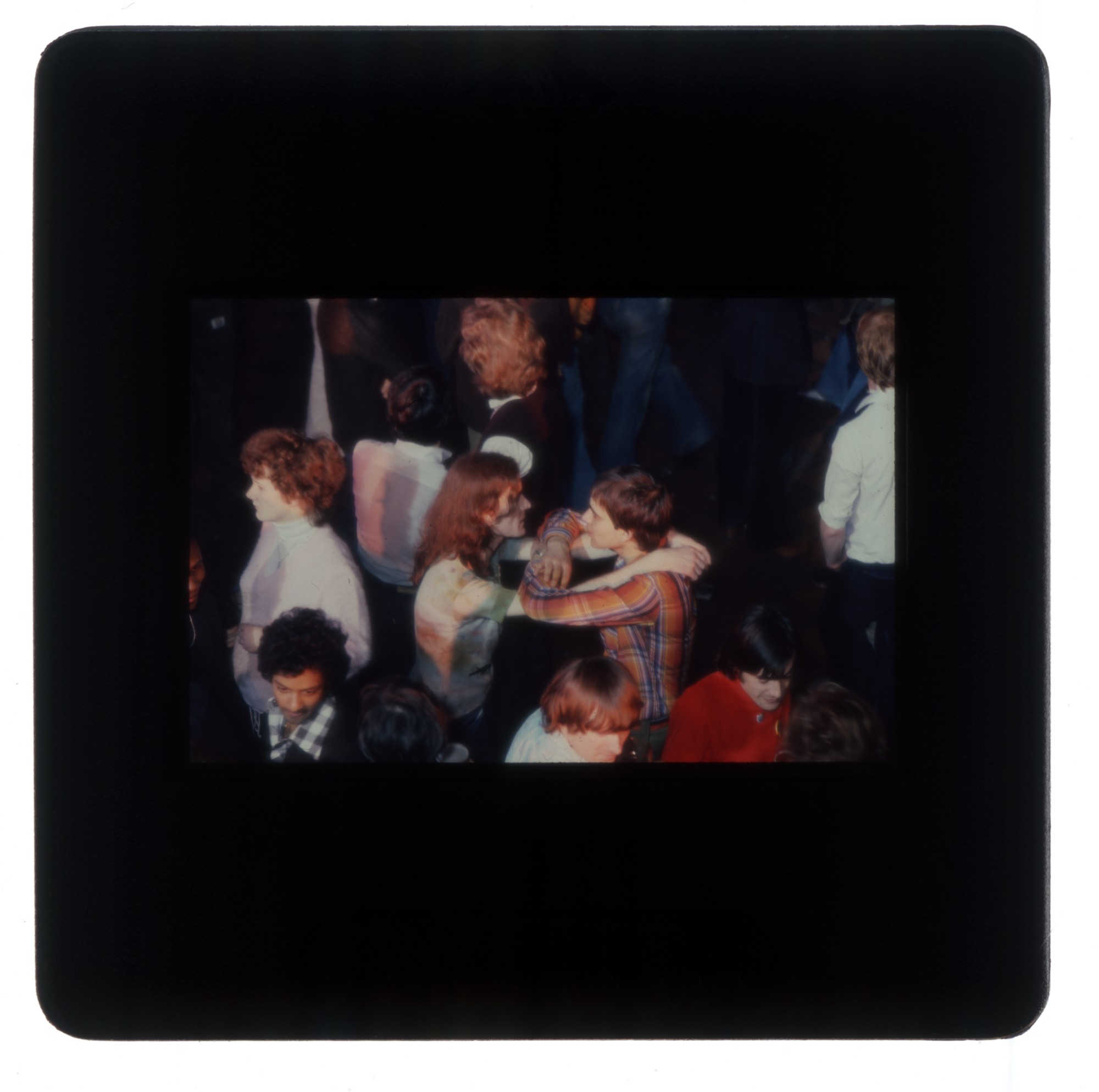
This sheet of slides, held at the Bishopsgate Institute, comes from the main shoot of Nighthawks (1978). The end of the second row of slides captures a quiet yet intimate moment between the main character, Jim, played by Ken Robertson, and one of his many partners. Though never overtly explicit, Nighthawks presents a tender portrayal of queer sexuality, using suggestion and atmosphere to evoke the emotional depth of Jim’s relationships. Something still radical in contemporary times.
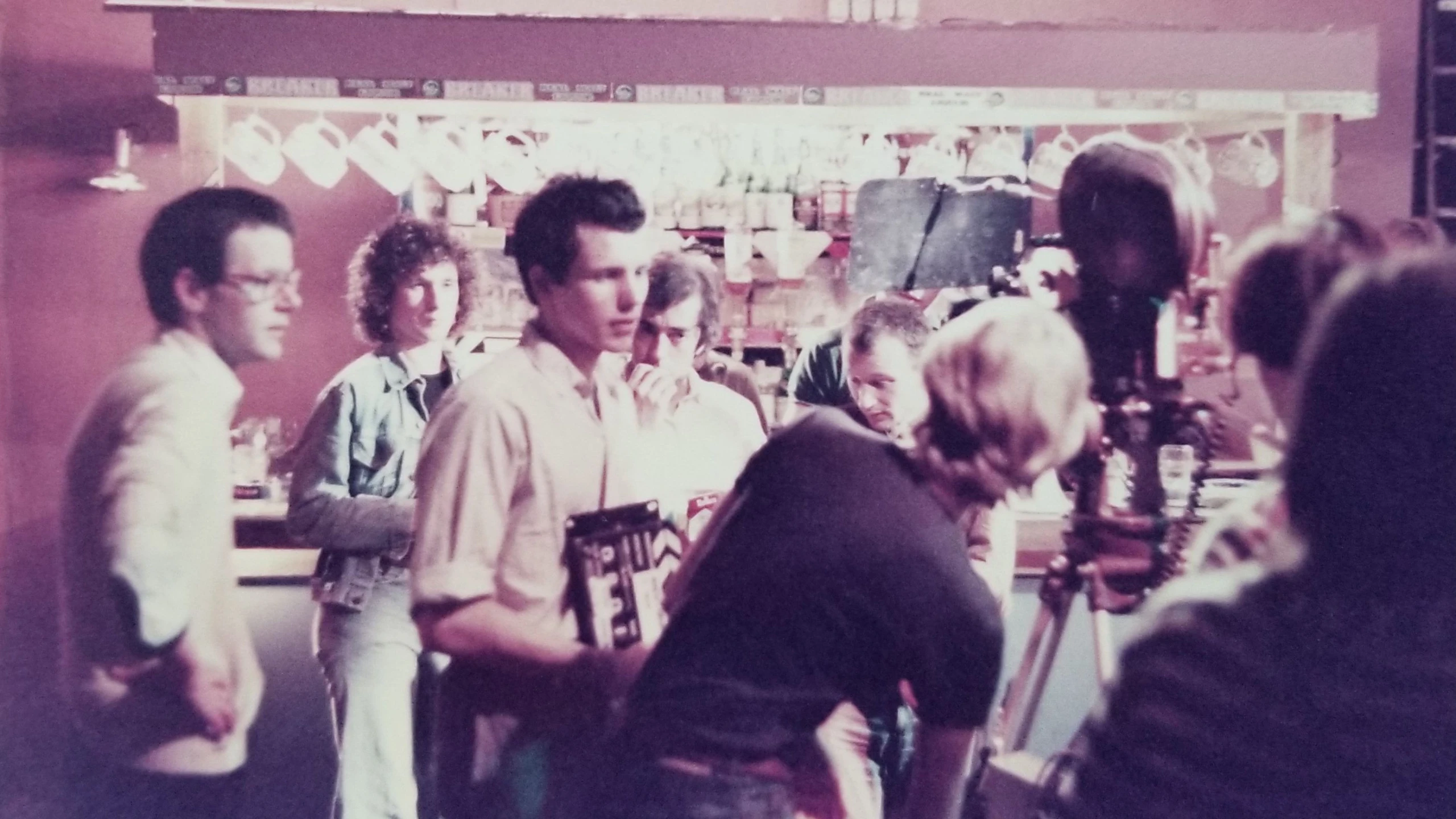
The production itself was deeply rooted in the reality of London’s gay scene in the 1970s. Over 200 members of the community were involved both on-screen and behind the scenes. This made the film’s content even more reflective of the real experiences of queer individuals, as the majority of the cast and crew identified as such. Many potential extras declined to participate out of fear for their safety and the potential consequences to their social and family lives.
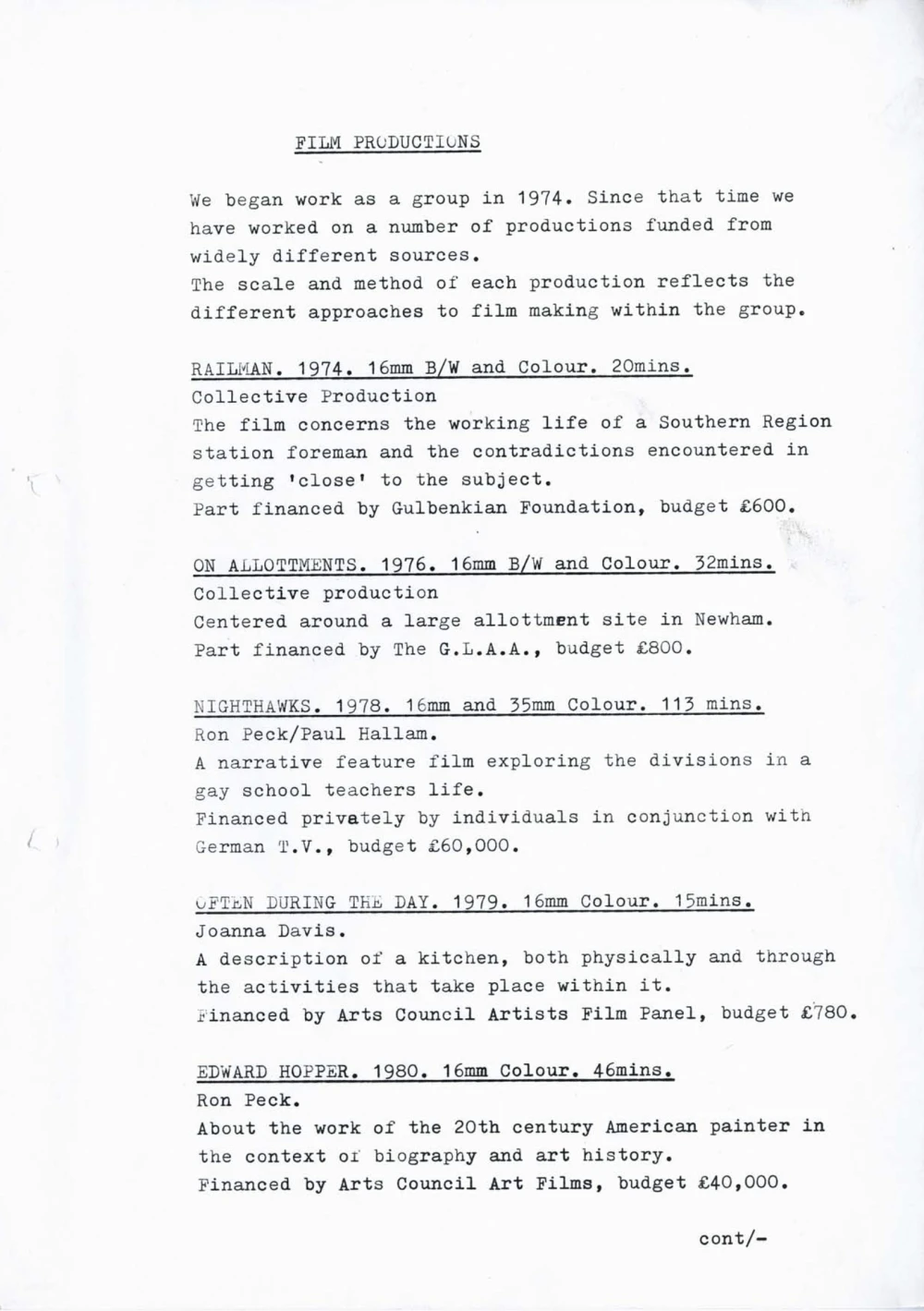
One particularly significant production document reveals the network of independent investors who helped bring Nighthawks to life, many of whom were prominent figures and cultural icons within the queer community. A detailed production timeline records these contributions, with formal contracts secured by January 1978 found in a catalogue through Bishopsgate. The film was ultimately funded through a combination of private investment and support from the German television broadcaster ‘Zweites Deutsches Fernsehen’ (ZDF). Among the principal backers were Elton John, his manager John Reid, filmmaker John Schlesinger, artist David Hockney, producer Michael Oliver, and director Don Boyd.

Forward Thinking
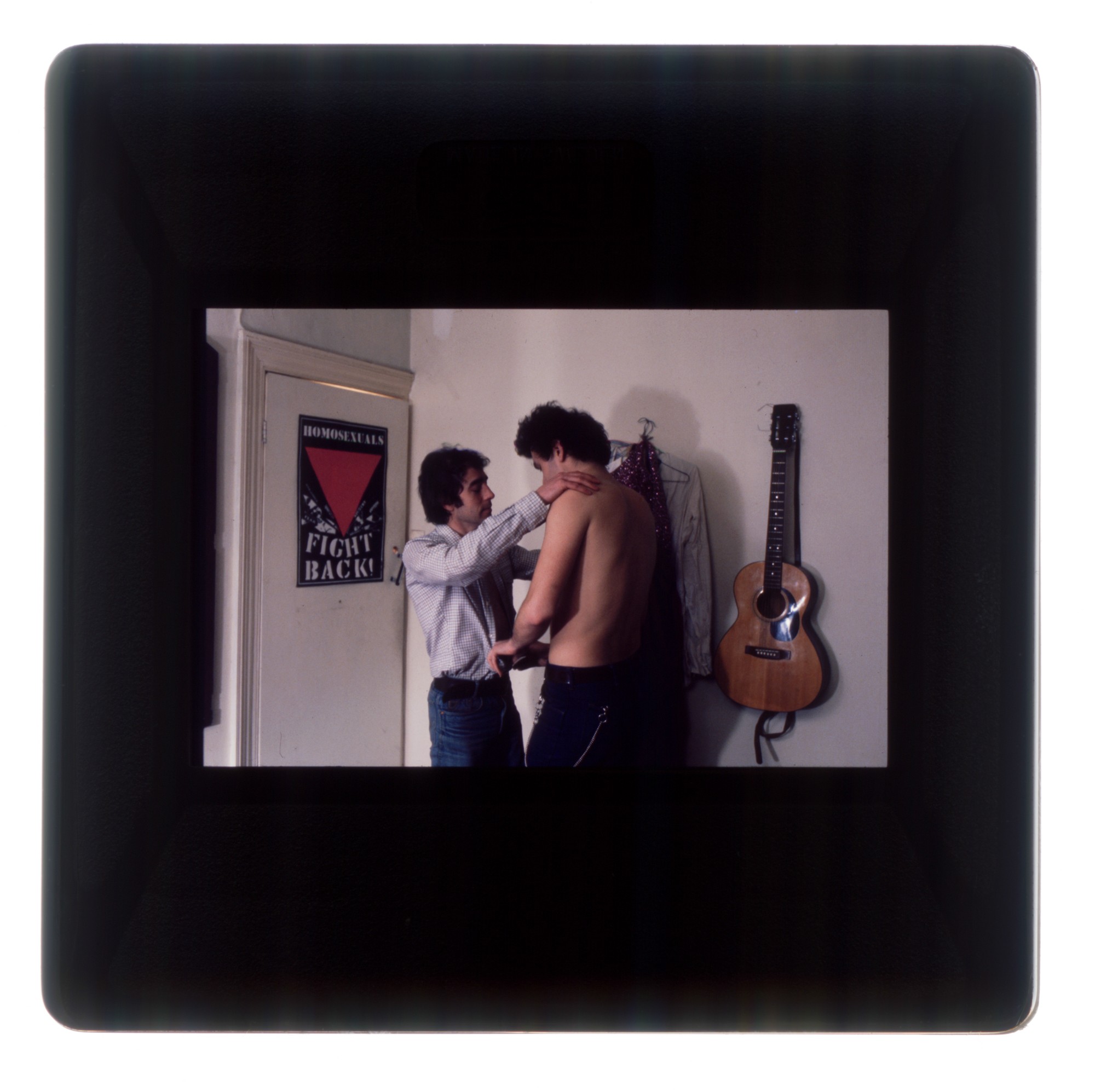
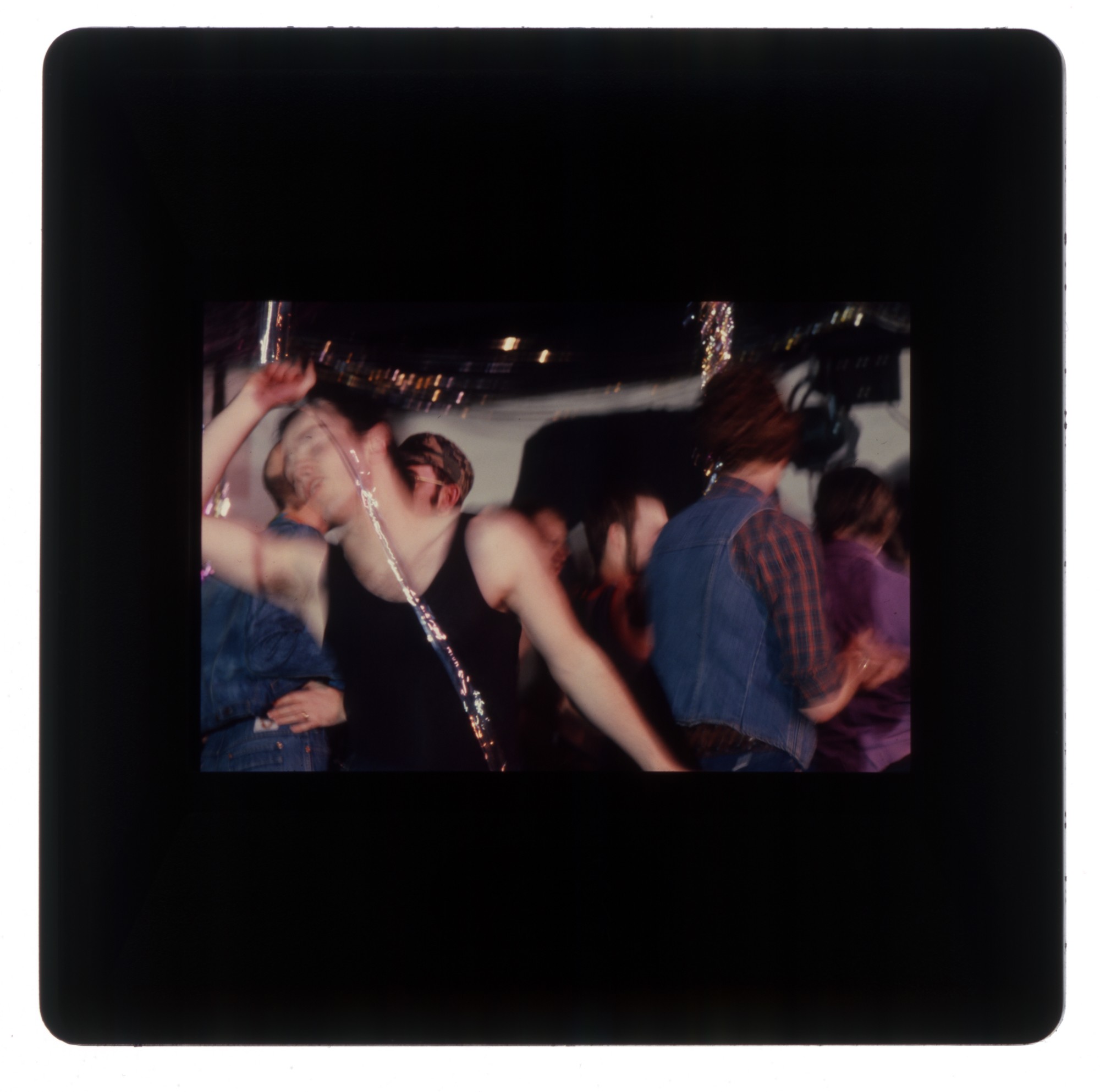
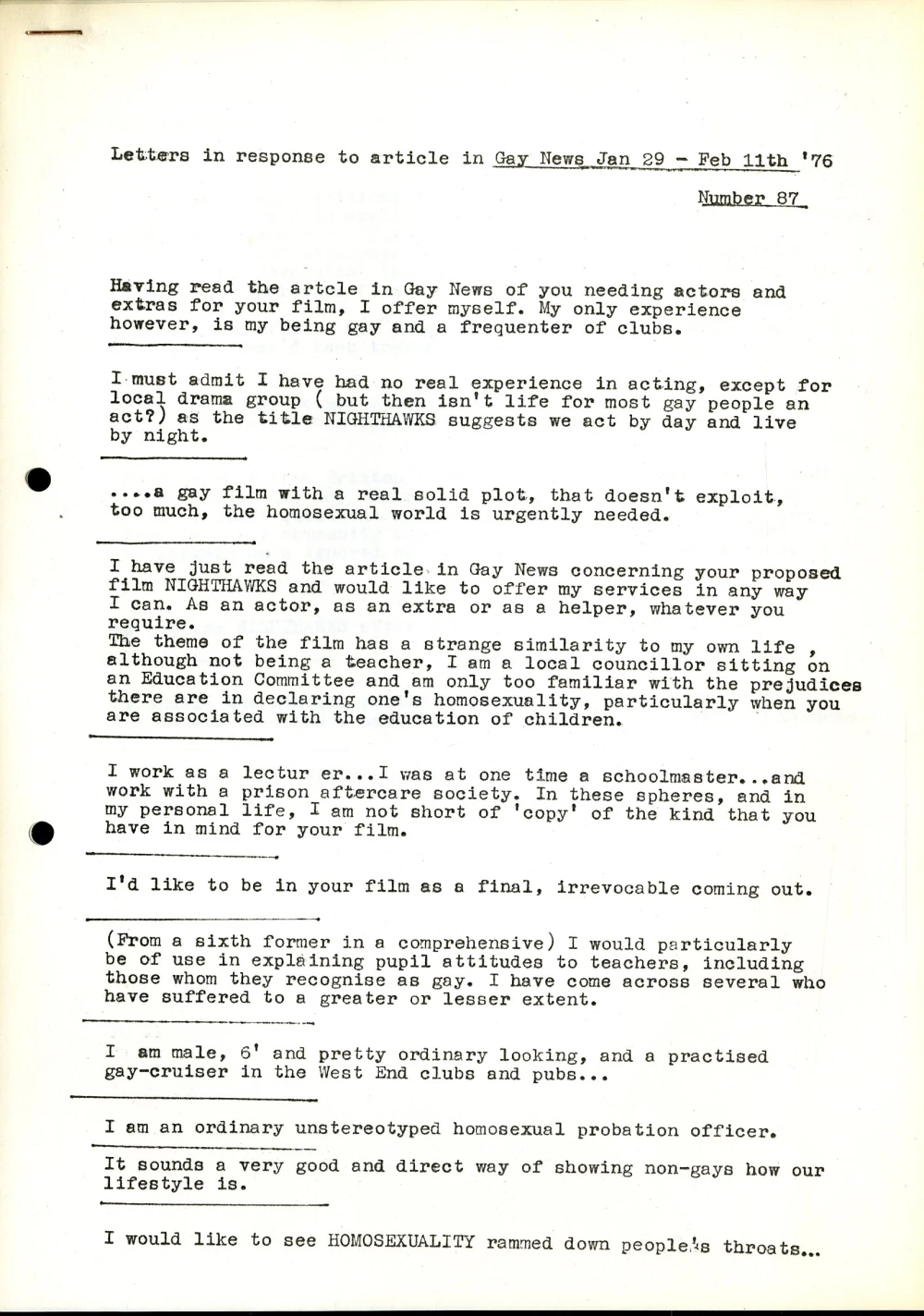
The need for queer representation and dedicated queer spaces was both evident and urgent, as demonstrated by the response from the queer community. This urgency remains deeply relevant today. Letters poured in after an ad was placed in Gay News calling for contributions to the film and highlighting the importance of club culture within queer life. One respondent wrote, “A gay film with a real solid plot, that doesn’t exploit too much, the homosexual world is urgently needed.”
The club scene was vital to the existence and celebration of queer communities, particularly in the key queer boroughs in the 1970s, Soho and Earl’s Court. Several important venues featured in the film include The Salisbury on St. Martin’s Lane, the South London Gay Community Centre in Brixton, and Glades Disco. In Godden's personal life, the Catacombs and Heaven were places he frequented in the 70s. Heaven is still standing as one of London’s most iconic gay clubs.
In the Jaye podcast on Nighthawks, it is noted that trans women wrote in hoping to be included in the film, but were ultimately rejected by Ron Peck. The Catacombs as mentioned, was a club frequented by trans women, though it offered community, its low brick ceilings made it physically challenging for those wearing wigs, revealing how even inclusive spaces could fall short of true accessibility.
While the political climate of 1970s Britain differs in context, it reflects many of the same tensions seen today, particularly in the treatment of queer subcultures, especially trans individuals and trans women, who remain under intense political scrutiny. In the 1970s, filmmaker Ron Peck gave voice to marginalised queer communities, but today it is even more crucial to acknowledge and include the groups historically left out of that narrative.
The silencing, regulation, and policing of queer lives in the 1970s still parallel current political conflicts. Just as the 1967 Sexual Offences Act and the 1988 Section 28 legislation contributed to queer oppression, recent legal rulings continue that pattern. On 30 June 2025, the UK Supreme Court ruled that under the Equality Act 2010, the terms “woman” and “sex” refer strictly to biological sex, meaning that transgender individuals, even those with a Gender Recognition Certificate, are not recognised as having changed sex for legal protections. This decision, which rejected the Scottish government’s argument for equal protections, reflects the ongoing efforts to limit the rights of trans people in the UK.
Ron Peck’s Nighthawks reminds us of the ongoing need for representation and humanisation of queer communities in mainstream media. The demand for spaces, stories, and entertainment centred on queer lives is not a relic of the past; it remains a vital and necessary history that deserves wide visibility.
Institutions with rich archival collections, like Bishopsgate and Four Corners, play a crucial role in preserving these stories and making them accessible to the public. Nighthawks is just one example in a broader movement that uses art, storytelling, and historical preservation to resist oppression and amplify the voices within queer communities, supported by the institutions that uplift their legacies.